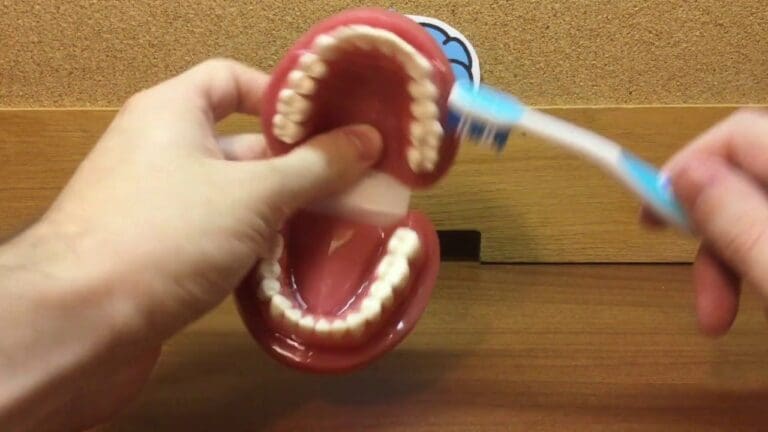
An end tuft toothbrush, also called a single tuft toothbrush, is a very small brush made for tooth brushing in hard to reach parts of the mouth. It targets dental plaque on the gum line, behind the last molars, around braces and wires, around implants and bridges, and on crowded teeth where a normal toothbrush head cannot reach well. Using it can support daily tooth brushing and help keep teeth and gums clean in these tight spots.
What studies show
Clinical research reports that a single tuft toothbrush can remove plaque in specific sites that are hard to clean, for example the sides of molars and areas near orthodontic brackets. In orthodontic patients, adding a single tuft brush to regular tooth brushing helped control new dental biofilm, which is the sticky layer that becomes plaque. These findings support the use of the tool as an add on for tooth brushing, not a full replacement for cleaning all tooth surfaces.
Who benefits
People with braces, bonded retainers, implants, bridges, wisdom tooth areas, gum recession, or crowded teeth often find this brush useful. It helps when floss or a normal toothbrush head does not reach a small corner of a tooth or the gum line. Guidance from professional bodies also recognizes specialty toothbrush designs, and products can seek the ADA Seal when they meet safety and performance standards for plaque removal and gum health.
How to use it
Brush your teeth as usual with a regular manual or powered toothbrush, then use the end tuft to clean the last tricky spots. Aim the small bristles toward the gum line and into narrow spaces, use short gentle strokes, and avoid hard scrubbing. Keep daily interdental cleaning with floss or interdental brushes as advised by your dental professional.
Bottom line
An end tuft toothbrush is a simple, low cost helper for tooth brushing. It improves access to plaque on the gum line and around braces and other dental work. It should work with, not replace, full mouth brushing and interdental cleaning for healthy teeth and gums.
The plaque removing efficacy of a single tufted brush on the lingual and buccal surfaces of the molars, 2011
In a clinical trial on back teeth, the single tuft brush improved plaque removal in several hard to reach sites, though not all, supporting its role as a targeted adjunct rather than a full replacement.
Effectiveness of different types of toothbrushes on periodontal health in orthodontic patients with gingivitis, 2024
In patients wearing fixed orthodontic appliances, single tuft brushes used with routine care reduced plaque and gum inflammation over a short period, suggesting benefit during orthodontic treatment.
Effect of a single tufted toothbrush on the control of dental biofilm in orthodontic patients, 2018
Combining a single tuft brush with a conventional brush helped control new plaque formation around braces, supporting its use as an add on tool.
American Dental Association, Toothbrushes, 2022
Overview of manual, powered, and specialty toothbrushes, with safety and performance considerations recognized by the ADA.
ADA Seal of Acceptance, Toothbrushes, Acceptance Program Requirements, updated June 2025
Criteria and study guidelines for manual, powered, and specialty toothbrushes to meet ADA safety and performance standards.
Interdental hygiene devices for periodontal health, 2016
Narrative review describing interdental tools, including single tufted brushes, as part of daily plaque control for periodontal health.