Clear aligners, sold under brands such as Invisalign, and fixed braces both straighten teeth. Aligners suit mild to moderate problems, such as mild crowding or gaps, in people who wear the trays almost all day. Braces cover the widest range of problems, including complex bite corrections. The American Association of Orthodontists (AAO) states that neither appliance is better in itself: the right one depends on the case, and an orthodontist makes the choice after an exam.
Straightening teeth is about more than looks. The AAO’s braces page lists better oral hygiene, clearer speech, and more comfortable eating among the benefits of orthodontic treatment.
How clear aligners work
Clear aligners are thin, clear plastic trays made to fit your teeth. According to the AAO’s guide to clear aligner treatment, each tray is usually worn for 1 week, at least 22 hours a day, and moves the teeth a fraction of a millimeter. The trays come out for eating, drinking, brushing, and flossing. The same guide lists the placement of attachments, small tooth-colored bumps bonded to some teeth, as part of the first fitting.
The AAO describes aligners as an option for mild to moderate problems, such as gaps, crowding, and some bite issues. It also says that aligners are not right for everyone and that some cases are treated more predictably with braces. Results therefore depend on wearing the trays as prescribed.
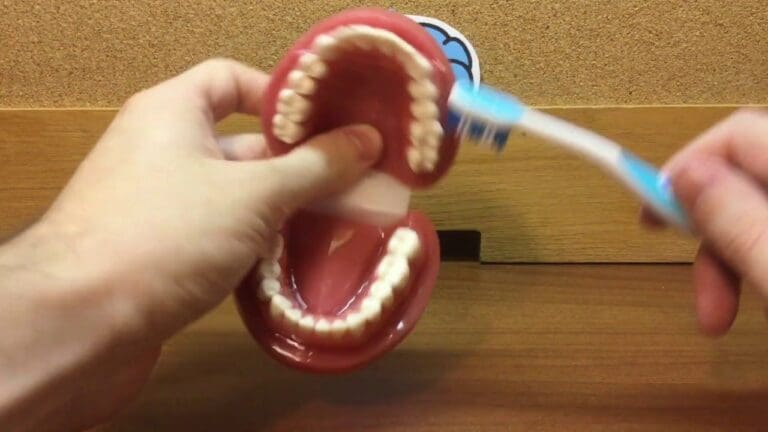
Because the trays come out, daily care stays the same as without treatment, for example with the modified Bass technique for brushing along the gum line.
How braces work
Braces are small brackets glued to the teeth and joined by a thin wire that the orthodontist adjusts over time. They stay on the teeth for the whole treatment, so the result does not depend on daily wear. The AAO’s braces page lists traditional metal, ceramic (tooth-colored), self-ligating, and lingual braces (placed behind the teeth).
According to the same AAO page, most people wear braces for 12 to 24 months. The same page says adjustment visits take place every 4 to 12 weeks, depending on the stage of treatment. The downsides are visibility for metal brackets and harder cleaning around brackets and wires.
Clear aligners vs braces: what a large review found
A 2019 meta-analysis comparing clear aligners with fixed braces pooled eight studies: two randomized controlled trials and six cohort studies. A meta-analysis combines the results of earlier studies to get a clearer answer. The review covered 706 patients, 353 treated with aligners and 353 with braces.
Both treatments straightened teeth. The authors found no statistically significant difference in the Objective Grading System score, a standard rating of the finished result. In the three studies that measured treatment time, the same analysis found that aligner treatment was about 6.3 months shorter on average.
Braces did better on several points, the authors reported: good contact between upper and lower teeth, control of tooth root angle (torque), widening of the dental arch, and keeping the result stable. The review also notes that one included study found braces more efficient in patients who needed teeth removed (extractions).
| Clear aligners | Braces | |
|---|---|---|
| How they work | Removable clear trays, changed in a set order | Brackets glued to the teeth, joined by a wire |
| Visibility | Nearly invisible | Visible (metal) or less visible (ceramic, lingual) |
| Daily wear | Worn almost all day, removed to eat and brush | Fixed, nothing to remember |
| Best suited to | Mild to moderate crowding, gaps, and some bite issues | Most problems, including complex bite corrections |
| Weak points | Bite contacts, root control, and arch widening | Cleaning around brackets and wires |
Cleaning and gum health
Brackets and wires trap food and plaque, the sticky film of bacteria on teeth. A 2025 systematic review on aligners, braces, and gum health included eight studies of patients with gum disease (periodontitis). The authors found that aligners, which come out for brushing, were linked to better oral hygiene and less gum inflammation than fixed braces.
People with braces can reach the plaque around brackets with an end tuft toothbrush made for braces and the gum line and with interdental brushes that clean the spaces between teeth.
What clear aligners and braces cost
Invisalign does not publish one fixed price. Its own cost pages, such as the Invisalign India page, state that the treating doctor sets the fee. The price depends on how complex the case is, how long treatment lasts, and which provider the patient chooses.
The AAO’s braces page gives no prices either and says the cost of braces depends on the type, the complexity, and the length of treatment. The AAO aligner guide adds that dental plans with orthodontic coverage usually cover braces and aligners equally, although each plan differs.
After treatment: retainers for everyone
The AAO’s page comparing braces and clear aligners says all patients must brush and floss every day during treatment and will need to wear retainers afterward. A retainer holds the teeth in their new position and stops them from moving back.
In short, aligners suit people with mild to moderate problems who will wear the trays almost all day, and braces remain the broader tool for complex bite corrections. Check these points with an orthodontist, who sets the plan after examining your teeth.
Sources and related information
BMC Oral Health – A comparison of treatment effectiveness between clear aligner and fixed appliance therapies – 2019
Systematic review and meta-analysis by Ke, Zhu, and Zhu: eight studies, 706 patients, similar finished results, shorter aligner treatment in three studies, and better bite contacts, torque control, arch widening, and stability with braces. Abstract on PubMed (PMID 30674307), DOI 10.1186/s12903-018-0695-z.
Children – The differential impact of clear aligners and fixed orthodontic appliances on periodontal health: a systematic review – 2025
Systematic review by Dipalma and colleagues of eight studies in patients with periodontitis, reporting better oral hygiene and less gum inflammation with aligners. Full text on PubMed Central (PMC11854263), DOI 10.3390/children12020138.
American Association of Orthodontists – Clear aligners – n.d.
Patient guide from the AAO: how aligner trays move teeth, the wear rule of at least 22 hours a day, the problems aligners treat, the cases treated more predictably with braces, and insurance coverage.
American Association of Orthodontists – Braces – 2022
Patient guide from the AAO on types of braces, benefits, and typical treatment length, visit frequency, and what drives the cost.
American Association of Orthodontists – Braces vs. clear aligners – 2019
The AAO explains that neither appliance is better in itself, that most problems can be treated with braces, and that all patients need retainers after treatment.
Invisalign – How much does Invisalign treatment cost? – n.d.
Invisalign’s India cost page states that the treating doctor sets the price, which varies with case complexity, treatment length, and provider.