

Neuroscience
Insights into the biological foundations of consciousness and the human experience.
Brain Basics
Virtual avatars rewire body perception and ease trauma through brain plasticity
When people use virtual reality (VR) to embody avatars, such as taller, younger, or more muscular versions of themselves, their…
We create a false self in early life to meet external expectations and cope with childhood experiences – James Hollis
James Hollis explores the psychological and spiritual upheaval of midlife as a necessary and meaningful rite of passage. Drawing from…
Bilinguals who learned young have more efficient brain networks
In 151 Montreal adults, people who learned a second language from birth or by age 5 had more efficient brain networks than monolinguals, mainly through stronger cerebellum links. Late learners showed no clear difference.
Psychological abuse leaves real trauma effects
Psychological abuse and coercive control are linked to PTSD, depression, and measurable trauma-related brain changes. The evidence is strong, but it does not show identical or permanent damage in every survivor.

Learning multiple new skills can produce test scores comparable to adults 30 years younger
Older adults who learn multiple new skills simultaneously can achieve cognitive performance similar to adults 30 years younger. A UC Riverside study found that 3 months of intensive learning improved memory, attention, and cognitive control, with gains maintained up to one year later.
Brain Habits

Psychiatrist says introspection is our closest link to reality
Psychiatrist Grant Brenner argues that looking inward gives the most direct contact with reality because it skips the senses. Experiments show people often misreport their own minds, so a shorter path does not mean a more accurate one.
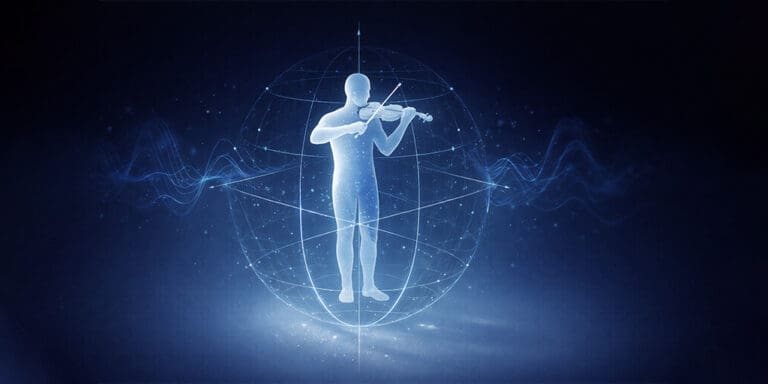
Musical training is linked to better body orientation without vision
In a small lab study, musicians showed less disorientation on a blindfolded stepping task compared to non-musicians.

Flow state explains how deep focus boosts happiness and performance
Flow state is a deep immersion that boosts performance and mood. Learn how to achieve flow state using psychology and neuroscience to get in the zone.
 video
People who often recall dreams spend twice as long awake at night
In lab studies, people who often remember dreams spent about twice as long awake at night as rare recallers, mostly through longer awakenings, and their brains reacted more to outside sounds.
High sweetener intake tied to 63% faster cognitive decline
In a Brazilian study of 12,772 adults followed for eight years, people who consumed the most low- and no-calorie sweeteners showed a 63% faster decline in thinking and memory than the lowest consumers. The study shows a link and cannot prove cause.
 video
Listening to theta binaural beats may help calm and sleep
Binaural beats are a sound effect made by playing two slightly different tones, one in each ear. The brain perceives…
Brain Research

Memory rejuvenation restored recall in mice
An EPFL Neuron study found that brief OSK gene activation in memory-trace neurons improved recall in aged and Alzheimer's-model mice. The result suggests some memory decline may reflect aging neurons rather than erased memories, but it does not show human memory restoration.

A fully synthetic scaffold grows brain-like tissue without animal coatings
UC Riverside researchers report a fully synthetic scaffold that grows functional brain-like tissue without animal-derived materials or added biological coatings.
Long COVID brain fog linked to a change in brain cell receptors
Long COVID brain fog linked to higher AMPA receptors on PET scans; new study points to a biological marker and possible AMPAR-targeted treatments.
Spinal cord ejaculation study reshapes sex research
A 2025 mouse study found that spinal cord neurons help shape sexual arousal, pacing, and ejaculation. It does not show that the spinal cord replaces the brain or that the same mechanism is proven in humans.
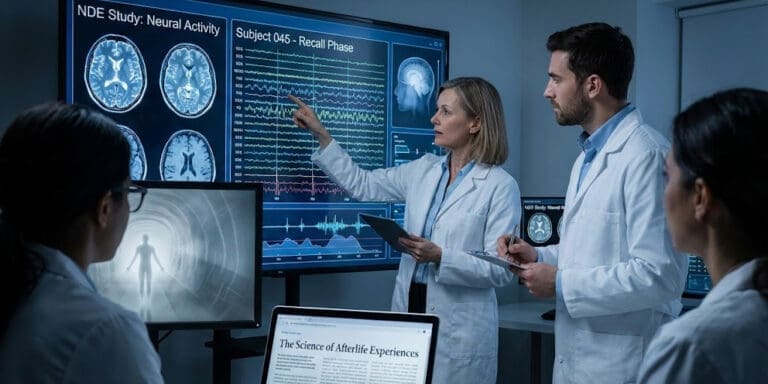
Scientists study near death events, but proof of life after death is still missing
Near death reports now meet modern tools in hospitals. We see short windows of organized brain activity while the heart is stopped, and we see rare moments of mental clarity before death. These observations keep the debate open, but they do not prove life after death.
Humpback whale Twain answered scientists’ calls for 20 minutes
In Alaska in 2021, a humpback whale named Twain answered a recorded whale call played by scientists for 20 minutes and matched the timing of their playbacks. The 2023 PeerJ study shows that playback experiments can test how whales take turns, though it rests on one whale and one encounter.