

Biotech - All posts
This archives page shows all posts of this category. Go back to category guide: Biotech »
 video
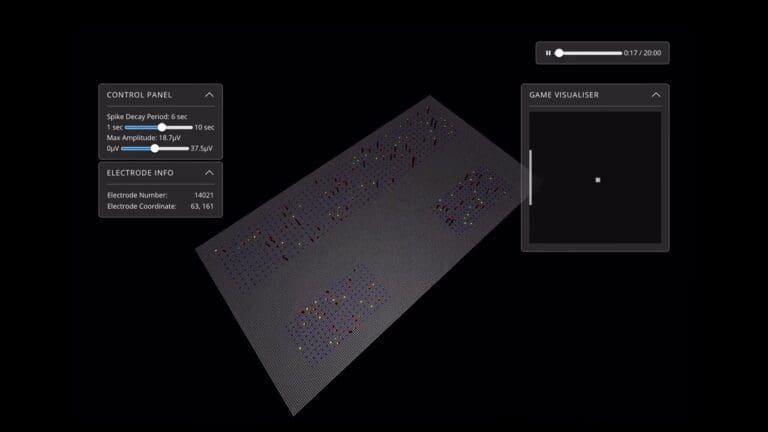
FinalSpark rents out human brain cell computers for $500 a month
In 2024, Swiss start-up FinalSpark rented universities remote access to living human brain organoids for $500 a month. Its peer-reviewed paper describes the setup, built to test whether neurons can compute with far less energy than chips.
Scientists use living fungus to steer a robot
Researchers have created biohybrid robots using fungal mycelia, which are robust and responsive to environmental cues. These living components generate…
Scientists stored data equivalent to 1,000 computers on a single strand of DNA
Advances in DNA Computing: Achieving Functional DNA-Based Logic Gates Researchers have made significant progress in DNA computing by developing functional…
 video
Only about 2 in 100 cloned dog embryos become live puppies
Hwang Woo-suk's dog cloning lab reports that a little more than 2% of cloned embryos become live puppies. A former Sooam Biotech employee says the surrogate dogs behind each clone suffer, which is why she quit.
Tiny carbon tubes could make AI chips faster and more brain-like
Researchers are using carbon nanotubes to improve neuromorphic computing, a field of AI that mimics the human brain’s neural networks.…
Injectable nanobots could deliver drugs to exact spots in the body
Recent advancements in nanotechnology have led to the creation of tiny robots, or nanobots, that can be injected into the…
Evo AI predicts gene mutations and could speed up bio design
Evo AI predicts the effects of gene mutations across DNA, RNA, and proteins, a step that could speed disease research and synthetic biology.

Drug to regrow teeth moves closer to clinical use
A drug that blocks the USAG-1 protein could enable natural tooth regrowth in humans. Kitano Hospital reports that an investigator-initiated Phase I trial is underway at Kyoto University Hospital (Ki-CONNECT) from September 2024 to August 2025. The researchers aim to make the treatment available by 2030 for people with congenital tooth loss.
Glowing trees are still far too dim to replace street lights
Daan Roosegaarde proposed glowing trees in place of street lamps. Plants that glow on their own now exist, but their light is still far weaker than ordinary night lighting.