

Dark Traits
All Dark traits (22) »
Can an AI “Gaslighting Detector” help you see manipulation clearly?
AI “gaslighting detectors” can help you spot manipulation patterns (but they can’t replace context or real support). Here’s how to use them safely.
Personal attacks are the lowest form of debate: attack the argument, not the person
Why Schopenhauer’s “last resort” ruins thinking and how to debate without it. When conversations get tense, the easiest move is…
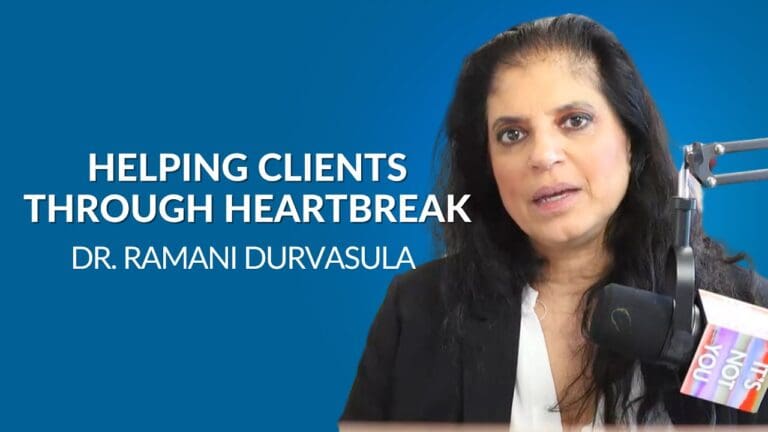 video
videoMedCircle: mental health interviews with psychiatrists & psychologists
Mental health interviews with world-class psychiatrists & psychologists, providing mental health advice packed with actionable takeaways and clear explanations of…
Saying “Sorry you feel that way” is a gaslighting tactic that hurts
Gaslighting is a form of psychological abuse that makes a person doubt their own experience and judgment. One common way…
Kind-hearted people often end up with narcissists and here is how to break the pattern
Why do some people seem to act like magnets for narcissistic partners or friends? Relationship writer Catherine Winter highlights eight…
Understanding emotional overreactions as echoes of past trauma improves adult communication
Emotional reactions in adult relationships can be disproportionate because they are linked to unresolved childhood trauma rather than the current…
A clear sense of purpose helps your personality grow at any age
Many people believe that personality is set early in life. A growing line of research suggests otherwise. New evidence shows…
4 common gaslighting phrases and what to say instead
Avoid these 4 common gaslighting phrases, like 'you're too sensitive,' that a psychologist says unintentionally invalidate feelings. Learn what to say instead.
Venting does not reduce anger, but cognitive reappraisal does
Lowering arousal, not venting, is key to anger management New research from Ohio State University, published in Clinical Psychology Review,…
Decisions
All Decisions (4) »Dreams
All Dreams (8) » video
videoHigh brain activity and micro-awakenings explain why some people remember dreams better
High brain activity in the temporo-parietal junction causes micro-awakenings that let some people remember dreams, while deep sleepers forget them.
Two people exchange a message while dreaming for the first time, startup claims
REMspace claims two lucid dreamers exchanged a message while asleep for the first time. Learn how the experiment worked and why scientists remain skeptical.
Startup says two people sent a word to each other while dreaming
A California startup reports that two lucid dreamers exchanged a simple message while asleep. According to the announcement, sensors confirmed…
Dreams as a key to brain function and health
The significance of dreams in brain activity and health Rahul Jandial’s insights reveal that dreams serve as a cognitive tool,…
AI advances toward decoding human dreams
Advancements in artificial intelligence are bringing scientists closer to decoding human dreams. AI algorithms can now analyze brain activity during…
Hypnagogic imagery: flashing-light devices guide the brain into dream-like states without drugs
The idea is simple: when a rhythmic burst of white light reaches your closed eyes, the neurons in your visual…
Device coming in 2025 to induce lucid dreams
A forthcoming device called Halo, expected to launch in 2025, is designed to help users achieve lucid dreams. By stimulating…
Japanese teams show MRI can decode simple dream content
For years, headlines said that Japanese scientists built an MRI dream machine. The research is real, but the claim is…
Intelligence
All Intelligence (29) »Are men less attracted to intelligent women?
2015 study: men are slightly less attracted to intelligent women, despite what they say Six experiments by Park and colleagues…
Asking follow-up questions and recalling small details are among seven habits that mark an exceptional listener
Exceptional listeners do more than stay quiet while others speak. Psychology research shows they share a set of subtle conversational…
Personal growth leads to spiritual awakening by expanding awareness beyond the ego
Developmental awakening maps the journey from ego to awareness. Learn how personal growth expands your perspective and leads to a spiritual waking up.
People with better thinking skills are better with tech
Cognitive abilities determine efficiency and mental load in everyday computer tasks This study investigates the relationship between cognitive abilities and…
Elon Musk achieves Top 20 world ranking in Diablo IV
Elon Musk has reached the top 20 players globally in the popular game Diablo IV, a surprising achievement given his…
Smarter people tend to be more generous and choose the common good
Research across psychology and economics suggests that higher cognitive ability, the mental skills used to learn, reason, and solve problems,…
Mark Zuckerberg says he can beat anyone at Civilization
Meta CEO Mark Zuckerberg says he wants to play Sid Meier’s Civilization live on Twitch and believes no one could…
The “Multiple Intelligences” theory: a persistent educational myth
Despite its popularity among educators, Howard Gardner’s “multiple intelligences” theory lacks scientific validation and has shown no effective educational application.…
 video
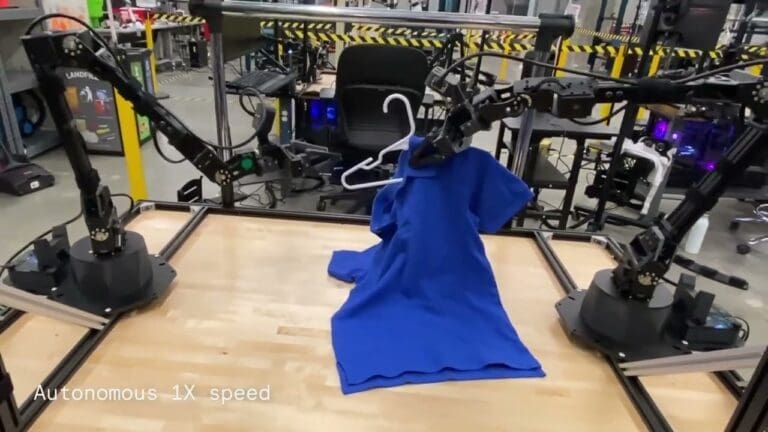
videoGoogle DeepMind trains robots to autonomously tie shoes and repair other robots
Google DeepMind has developed a robotic system capable of performing complex tasks such as tying shoes and repairing other robots.…
Intuition
All Intuition (2) »Accessing and trusting your intuition
Intuition is a legitimate cognitive skill that can guide decision-making, especially in complex or high-stakes situations. Research highlights that intuition,…
 video
videoThe human equation: finding fulfillment beyond material success
In this interview, author Laurent Gounelle discusses his latest novel, “An Almost Perfect World,” which explores the potential dangers of…
Neuroscience
All Neuroscience (81) »
Introspection provides our most direct contact with physical reality
Some authors argue introspection is our least sensory-mediated access to experience. But introspective reports are not direct neural measurement, and they can be unreliable.
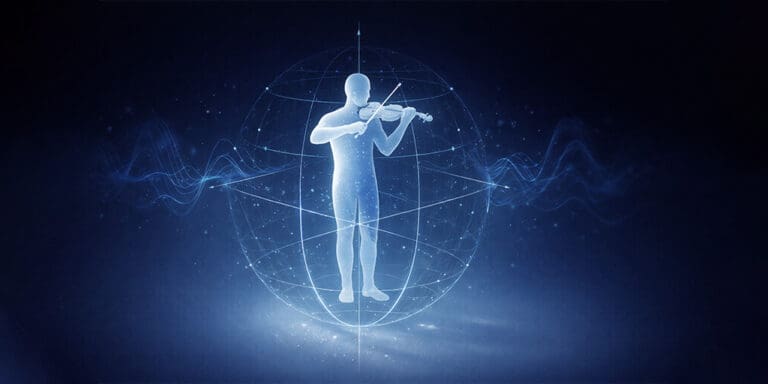
Musical training is linked to better body orientation without vision
In a small lab study, musicians showed less disorientation on a blindfolded stepping task compared to non-musicians.

Flow state explains how deep focus boosts happiness and performance
Flow state is a deep immersion that boosts performance and mood. Learn how to achieve flow state using psychology and neuroscience to get in the zone.

A fully synthetic scaffold grows brain-like tissue without animal coatings
UC Riverside researchers report a fully synthetic scaffold that grows functional brain-like tissue without animal-derived materials or added biological coatings.
videoHigh brain activity and micro-awakenings explain why some people remember dreams better
High brain activity in the temporo-parietal junction causes micro-awakenings that let some people remember dreams, while deep sleepers forget them.
Long COVID brain fog linked to higher AMPA receptors in the brain
Long COVID brain fog linked to higher AMPA receptors on PET scans; new study points to a biological marker and possible AMPAR-targeted treatments.
 video
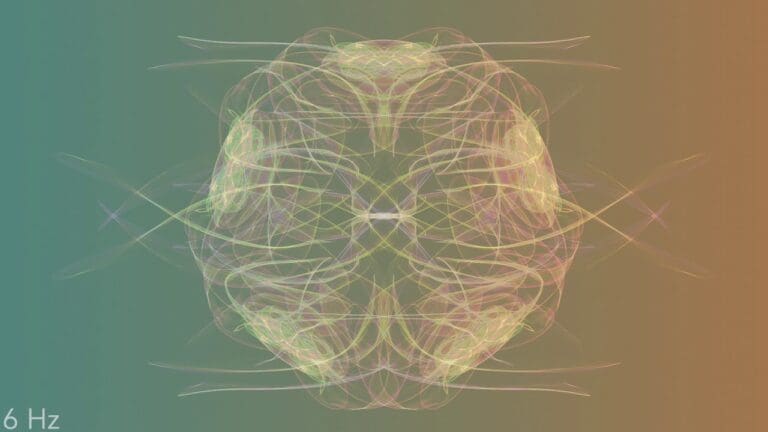
videoListening to theta binaural beats may help calm and sleep
Binaural beats are a sound effect made by playing two slightly different tones, one in each ear. The brain perceives…
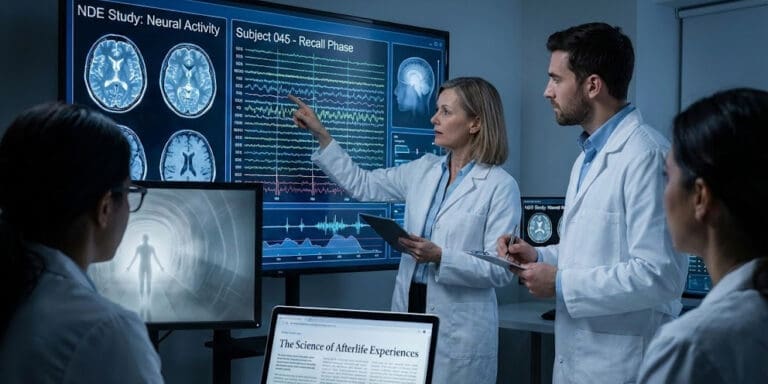
Scientists study near death events, but proof of life after death is still missing
Near death reports now meet modern tools in hospitals. We see short windows of organized brain activity while the heart is stopped, and we see rare moments of mental clarity before death. These observations keep the debate open, but they do not prove life after death.
Taking strategic breaks every 90 minutes keeps the brain sharp
An anonymous Redditor claiming to be a cognitive scientist posted the following message in r/Biohackers: As a cognitive scientist, I’ve…
Various Psychology
All Various Psychology (50) »Listening is the underrated skill that makes you a better leader instantly
144 studies confirm listening skills in leadership boost team performance. Learn why listening works and how asking follow-up questions makes you more likable.
The Pratfall Effect: why making mistakes can make you more likable
The Pratfall Effect shows that small mistakes make competent people more likable. Learn how spilling coffee can boost your appeal according to psychology.
Flow state explains how deep focus boosts happiness and performance
Flow state is a deep immersion that boosts performance and mood. Learn how to achieve flow state using psychology and neuroscience to get in the zone.

Invisible load in relationships: 3 signs you carry too much
Learn the 3 signs of invisible load in relationships: managing tasks, tracking details, and carrying emotional weight. Discover how to share the mental burden.
Gratitude helps us escape the hedonic treadmill
Gratitude explains why new gains fade and complaints rise.
Panic attacks: sour candy and cold exposure may quickly calm a panic spike
Sour candy for panic attacks On a Reddit conversation titled “What’s a crazy body life hack everyone should know?”, a…
videoMedCircle: mental health interviews with psychiatrists & psychologists
Mental health interviews with world-class psychiatrists & psychologists, providing mental health advice packed with actionable takeaways and clear explanations of…
The key to starting a dreaded task is to act without waiting for motivation
Harvard Business Review: How to actually start the task you’ve been avoiding To begin a task you have been avoiding,…
Virtual avatars rewire body perception and ease trauma through brain plasticity
When people use virtual reality (VR) to embody avatars, such as taller, younger, or more muscular versions of themselves, their…