

Neuroscience
Insights into the biological foundations of consciousness and the human experience.
Brain Basics
Virtual avatars rewire body perception and ease trauma through brain plasticity
When people use virtual reality (VR) to embody avatars, such as taller, younger, or more muscular versions of themselves, their…
We create a false self in early life to meet external expectations and cope with childhood experiences – James Hollis
James Hollis explores the psychological and spiritual upheaval of midlife as a necessary and meaningful rite of passage. Drawing from…
Learning a second language early strengthens brain connections and efficiency
Learning a second language is linked to a more efficient brain network. A research team reports that people who speak…
Psychological abuse leaves real trauma effects
Psychological abuse and coercive control are linked to PTSD, depression, and measurable trauma-related brain changes. The evidence is strong, but it does not show identical or permanent damage in every survivor.

Learning multiple new skills can produce test scores comparable to adults 30 years younger
Older adults who learn multiple new skills simultaneously can achieve cognitive performance similar to adults 30 years younger. A UC Riverside study found that 3 months of intensive learning improved memory, attention, and cognitive control, with gains maintained up to one year later.
Brain Habits

Introspection provides our most direct contact with physical reality
Some authors argue introspection is our least sensory-mediated access to experience. But introspective reports are not direct neural measurement, and they can be unreliable.
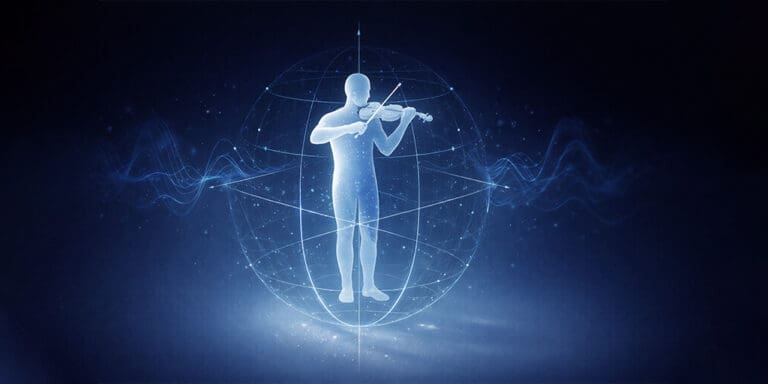
Musical training is linked to better body orientation without vision
In a small lab study, musicians showed less disorientation on a blindfolded stepping task compared to non-musicians.

Flow state explains how deep focus boosts happiness and performance
Flow state is a deep immersion that boosts performance and mood. Learn how to achieve flow state using psychology and neuroscience to get in the zone.
 video
videoHigh brain activity and micro-awakenings explain why some people remember dreams better
High brain activity in the temporo-parietal junction causes micro-awakenings that let some people remember dreams, while deep sleepers forget them.
Artificial sweeteners may speed cognitive decline
A large observational study linked higher intake of several artificial sweeteners to faster cognitive decline over about eight years, but it did not prove causation.
 video
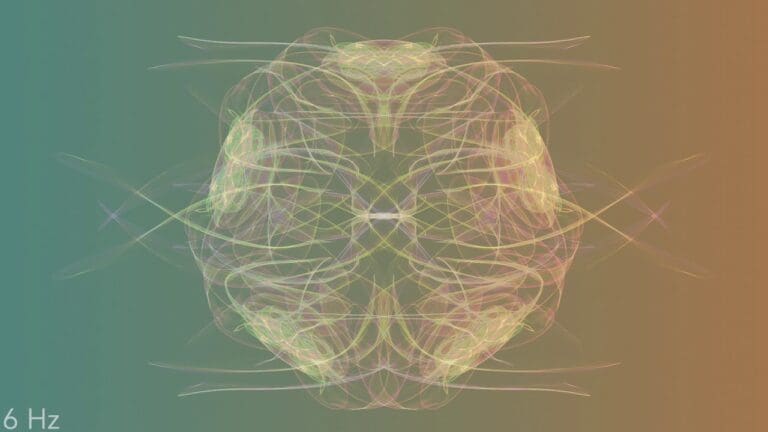
videoListening to theta binaural beats may help calm and sleep
Binaural beats are a sound effect made by playing two slightly different tones, one in each ear. The brain perceives…
Brain Research

Fixing one gene’s activity reversed anxiety signs in mice
Researchers identified regular-firing neurons in the centrolateral amygdala that drive anxiety behaviors. Normalizing GRIK4 gene dosage in basolateral amygdala pyramidal cells reversed anxiety, depression, and social deficits in mice overexpressing the gene, suggesting a targeted treatment approach for anxiety disorders.
Amygdala circuit tweak clears anxiety signs in mice
A May 2025 iScience mouse study (online 13 May 2025; print issue 20 June 2025) reports that normalizing Grik4 in basolateral amygdala pyramidal cells reversed anxiety-like behavior, depression-like behavior, and social deficits in a transgenic model, while object recognition stayed impaired. In non-transgenic mice that were already highly anxious on screening, the same approach yielded only partial relief of anxiety-like behavior on the elevated plus maze, not a broad reversal across domains. The work is preclinical and does not establish a human treatment.
Neurons employ multiple learning rules simultaneously
Brain learning involves multiple simultaneous synaptic rules, challenging traditional models New research reveals that the brain does not use a…
An AI can now read human thoughts from a brain scan
An AI brain decoder can read a person's thoughts and turn them into text from a brain scan. A new method now adapts it to someone in about an hour, and it works even from silent video.
Childhood trauma linked to smaller hippocampus after romantic breakups
A new study links romantic breakups to smaller hippocampal brain volume in adults with childhood trauma, showing how early adversity heightens stress sensitivity.
Gamified app helps reduce depression by breaking ruminative thought loops
A new gamified app reduces depression by speeding up thought progression and breaking ruminative loops, a clinical trial finds.