ICON did not 3D-print nearly 100 houses overnight. The Texas company’s Vulcan robot printed the walls of the 100 homes at Wolf Ranch, a new neighborhood in Georgetown, near Austin, taking about three weeks of printing per house. ICON began printing in November 2022, and by the summer of 2024 the printer was finishing the last few houses, Reuters reported.
ICON says Wolf Ranch is the world’s largest community of 3D-printed homes. It builds the houses with the homebuilder Lennar, and the architecture firm BIG (Bjarke Ingels Group) co-designed them. The video below is ICON’s own presentation of the neighborhood.
How long the Wolf Ranch 3D-printed homes really took
Only the walls are printed. The foundation and the metal roof of each house are built the usual way by human crews, according to the same Reuters report. ICON’s 2022 announcement says the company prints the full wall system of each home, inside and outside, using a fleet of its Vulcan robots.
Printing one house takes weeks, and the job had to be repeated across a whole neighborhood. According to the Reuters figures, that work ran from November 2022 into the summer of 2024 for the 100 homes, so the claim of a single night does not match the record.
Update (2025): ICON’s project page now lists Wolf Ranch as finished in 2025, with one hundred homes in total.
What the 100 homes at Wolf Ranch are like
The houses are single-story homes with three or four bedrooms and two or three bathrooms, according to ICON’s 2022 announcement. The same announcement lists eight floor plans with 24 different facade designs, from 1,574 to 2,112 square feet (about 146 to 196 m²). Every home has solar panels on its roof, the company says.
Developers call the homes the Genesis Collection, and they range in price from around $450,000 to close to $600,000, Reuters reported. In August 2024, the developers said a little more than one quarter of the 100 homes had been sold, according to the same report.
How the Vulcan printer builds a concrete wall
The Vulcan works like a desktop 3D printer at the size of a house. The same Reuters report describes a machine more than 45 feet (13.7 m) wide that weighs 4.75 tons.
A mix of concrete powder, water, sand, and other additives is pumped into the printer. A nozzle then lays the mix down layer by layer along a pre-programmed path, which gives the walls their ribbed, corduroy-like surface. Conner Jenkins, a senior project manager at ICON, told Reuters the concrete walls are designed to resist water, mold, termites, and extreme weather.
What 3D printing changes on the building site
ICON says printing homes is faster and cheaper than standard building, needs fewer workers, and wastes less material, Reuters reported. These are the company’s own claims. Independent figures on cost or total building time for Wolf Ranch are unknown based on available sources.
In the same report, Jenkins gave one concrete example: where about five different crews used to come in to build a wall system, the site now has one crew and one robot. This is ICON’s own description of its process.
Owners report two practical effects. In the same report, a couple who bought a Wolf Ranch home in the summer of 2024 said the thick walls keep the house cool in the Texas heat. The walls also block Wi-Fi signals, and an ICON spokeswoman said most owners use mesh routers, which spread the signal from several units placed around the house.
Other ways to build walls faster
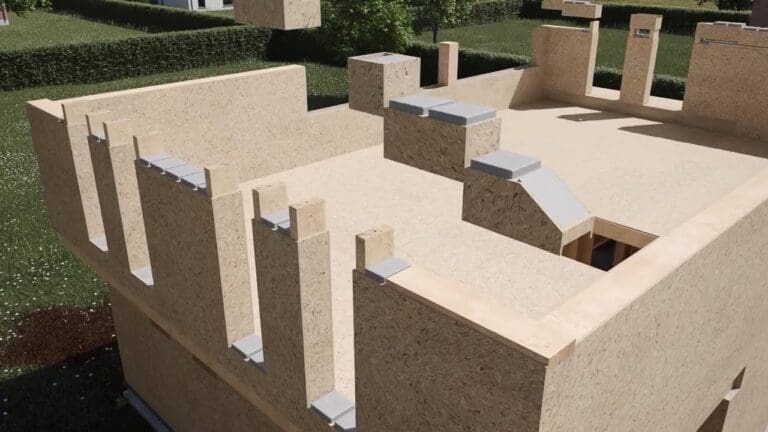
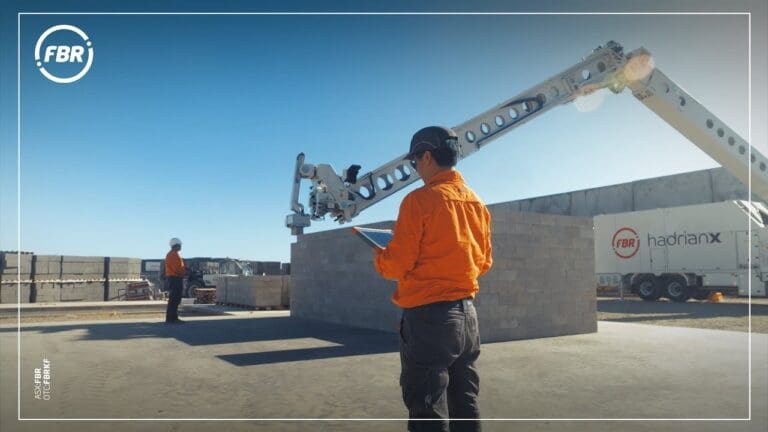
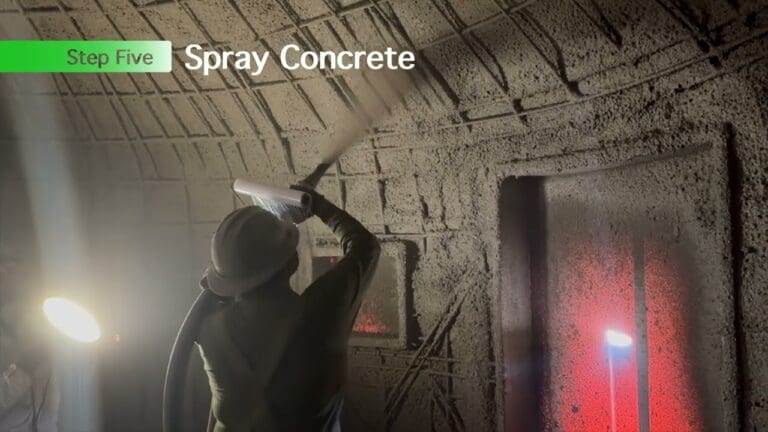
Printing concrete is one of several methods that try to cut the time needed to put up walls. A bricklaying robot called Hadrian X stacks masonry blocks and was shipped to the United States to build the walls of demonstration homes. In Belgium, Gablok sells stackable insulated wood blocks for self-builders. In another approach, monolithic domes use an air-inflated form, foam and concrete to make a one-piece shell.
Check prices, sizes, and availability against the sources below before acting on them.
Sources and related information
Reuters – World’s largest 3D-printed neighborhood nears completion in Texas – 2024
Evan Garcia’s report from Georgetown is the main source for the timeline: it states that ICON began printing in November 2022 and was finishing the last homes in the summer of 2024, at about three weeks of printing per house. It also gives the printer size, the price range, the share of homes sold, the crew comparison, and the Wi-Fi issue.
ICON – ICON and Lennar announce community of 3D-printed homes is now underway in Georgetown, TX – 2022
This press release from ICON and Lennar confirms the 100-home plan, the eight floor plans, and the home sizes, along with rooftop solar, the printed wall system, and BIG’s role in the design.
ICON – Wolf Ranch project page – n.d.
ICON’s project page supports the 2025 update: it lists Wolf Ranch as finished in 2025 and describes the community as one hundred residences designed with BIG.