

Neuroscience
Insights into the biological foundations of consciousness and the human experience.
Brain Basics
Virtual avatars rewire body perception and ease trauma through brain plasticity
When people use virtual reality (VR) to embody avatars, such as taller, younger, or more muscular versions of themselves, their…
We create a false self in early life to meet external expectations and cope with childhood experiences – James Hollis
James Hollis explores the psychological and spiritual upheaval of midlife as a necessary and meaningful rite of passage. Drawing from…
Learning a second language early strengthens brain connections and efficiency
Learning a second language is linked to a more efficient brain network. A research team reports that people who speak…
Psychological abuse leaves real trauma effects
Psychological abuse and coercive control are linked to PTSD, depression, and measurable trauma-related brain changes. The evidence is strong, but it does not show identical or permanent damage in every survivor.

Learning multiple new skills can produce test scores comparable to adults 30 years younger
Older adults who learn multiple new skills simultaneously can achieve cognitive performance similar to adults 30 years younger. A UC Riverside study found that 3 months of intensive learning improved memory, attention, and cognitive control, with gains maintained up to one year later.
Brain Habits
Your brain responds differently to love for a child, a partner, or a pet
A Finnish team used fMRI while 55 adults in relationships with children heard short stories about love toward a partner, a child, friends, strangers, pets, or nature, then held each feeling during a brief imagery period. Interpersonal love engaged social-cognition regions more than pet-only or nature love; during imagery, parental love showed striatum and thalamus activation not reported for the other love types; pet owners differed from non-owners on pet trials. Results reflect one cohort, culture, and task design.
Neuroplasticity and aging: your brain can still change
Neuroplasticity and aging show the brain can still change in adult life. Practice, challenge, and attention help, but plasticity is not magic.
Being open to new things helps creativity and learning, and may keep the brain healthier with age
Openness is a personality trait that means seeking and enjoying new and unfamiliar things. Research in psychology and neuroscience links…
Ultra-processed foods trigger addiction-like behavior in one in seven adults
A broad review of 281 studies from 36 countries concludes that some ultra-processed foods (UPFs), such as soft drinks, ice-cream…

The best way to quiet your mind: reduce multitasking
Multitasking creates cognitive fatigue and reduces focus. Research shows task switching incurs measurable costs, and phone interruptions fragment attention. Reducing multitasking and creating distance from devices helps quiet the mind and improve concentration.
Exploring more new places is linked to higher happiness
Most people cycle through a small set of familiar places. Research in human mobility suggests that, at any given time,…
Brain Research

Memory rejuvenation restored recall in mice
An EPFL Neuron study found that brief OSK gene activation in memory-trace neurons improved recall in aged and Alzheimer's-model mice. The result suggests some memory decline may reflect aging neurons rather than erased memories, but it does not show human memory restoration.

A fully synthetic scaffold grows brain-like tissue without animal coatings
UC Riverside researchers report a fully synthetic scaffold that grows functional brain-like tissue without animal-derived materials or added biological coatings.
Long COVID brain fog linked to a change in brain cell receptors
Long COVID brain fog linked to higher AMPA receptors on PET scans; new study points to a biological marker and possible AMPAR-targeted treatments.
Spinal cord ejaculation study reshapes sex research
A 2025 mouse study found that spinal cord neurons help shape sexual arousal, pacing, and ejaculation. It does not show that the spinal cord replaces the brain or that the same mechanism is proven in humans.
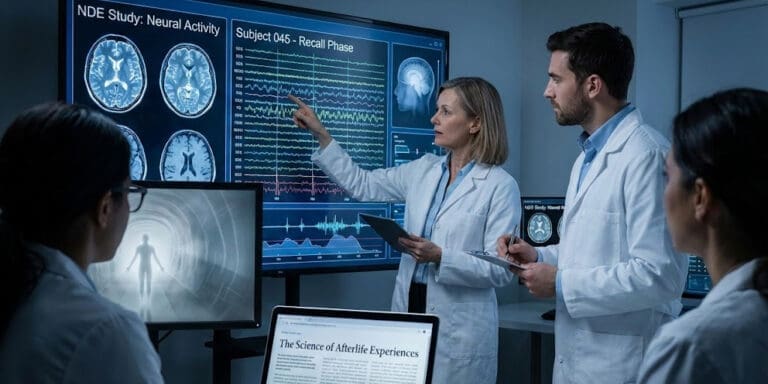
Scientists study near death events, but proof of life after death is still missing
Near death reports now meet modern tools in hospitals. We see short windows of organized brain activity while the heart is stopped, and we see rare moments of mental clarity before death. These observations keep the debate open, but they do not prove life after death.
AI enables first recorded 20-minute interactive exchange between humans and a humpback whale
An artificial intelligence system has enabled humans to engage in a 20-minute interactive exchange with a humpback whale, marking a…