

Neuroscience
Insights into the biological foundations of consciousness and the human experience.
Brain Basics
Virtual avatars rewire body perception and ease trauma through brain plasticity
When people use virtual reality (VR) to embody avatars, such as taller, younger, or more muscular versions of themselves, their…
We create a false self in early life to meet external expectations and cope with childhood experiences – James Hollis
James Hollis explores the psychological and spiritual upheaval of midlife as a necessary and meaningful rite of passage. Drawing from…
Learning a second language early strengthens brain connections and efficiency
Learning a second language is linked to a more efficient brain network. A research team reports that people who speak…
Psychological abuse leaves real trauma effects
Psychological abuse and coercive control are linked to PTSD, depression, and measurable trauma-related brain changes. The evidence is strong, but it does not show identical or permanent damage in every survivor.

Learning multiple new skills can produce test scores comparable to adults 30 years younger
Older adults who learn multiple new skills simultaneously can achieve cognitive performance similar to adults 30 years younger. A UC Riverside study found that 3 months of intensive learning improved memory, attention, and cognitive control, with gains maintained up to one year later.
Brain Habits
Taking strategic breaks every 90 minutes keeps the brain sharp
An anonymous Redditor claiming to be a cognitive scientist posted the following message in r/Biohackers: As a cognitive scientist, I’ve…
Exercise that works muscles helps neurons grow
Walking, cycling, and strength training contract muscles; MIT lab work finds these signals may speed motor neuron growth in mouse cells.
Everyday movement like cleaning or walking makes your brain act four years younger
Everyday movement like cleaning improves cognitive health and processing speed, making your brain act four years younger, a Penn State study finds.
AI as “System 0” risks reducing human autonomy in decision-making
Research from Università Cattolica suggests that AI can function as “System 0,” an external thinking process that complements human intuition…

Child trauma recovery depends more on thoughts than event severity
Child trauma recovery is shaped more by thoughts than event severity; evidence shows cognitive factors predict PTSD in children and support trauma‑focused CBT.
Walking after 10 minutes of mental struggle improves problem-solving, neuroscience confirms
Steve Jobs’s habit of taking walks when faced with tough mental challenges is supported by modern neuroscience. According to Cambridge-trained…
Brain Research
Scientists map every neuron and connection in an adult fly brain
Researchers have produced the first complete wiring diagram of an adult animal brain, a female fruit fly brain, showing how…
 video
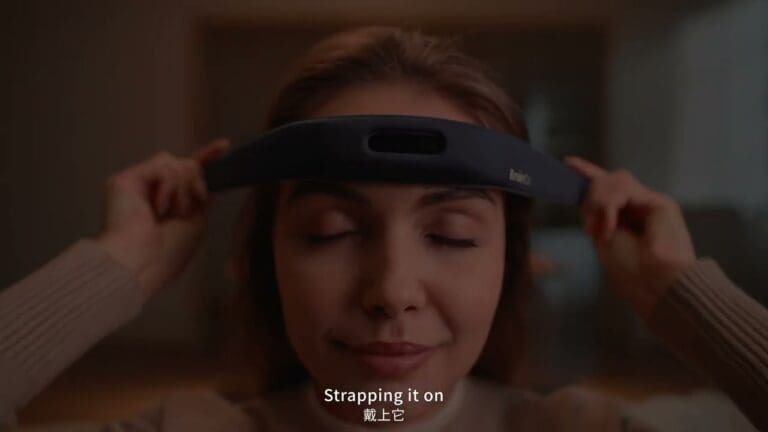
videoOxyZen by BrainCo: an AI meditation headband for sleep
This new AI meditation headband from BrainCo, called OxyZen, uses EEG sensors and an AI sleep coach to help you relax and sleep better.
Suggested slug: ai-meditation-headband-sleep
Physicist says human consciousness may link to hidden dimensions, evidence is missing
A physics professor, Michael Pravica of the University of Nevada, Las Vegas, has proposed that human consciousness could connect to…
Human dog brain synchronization may help explain the bond
Human dog brain synchronization happens during mutual gaze and petting, says a 2024 study, and may strengthen the bond while guiding autism research.
Daily blueberries may improve memory, but results are mixed
Several clinical studies suggest that eating blueberries can support brain function. One randomized trial in middle-aged adults at higher risk…
 video
videoNew rat study suggests consciousness comes from quantum vibrations in microtubules
A Wellesley College study finds that stabilizing microtubules in rats delays anesthesia, supporting the theory that consciousness arises from quantum processes.