Aging and cancer risk matter to almost everyone because cancer becomes more common as people get older. The clearest short summary comes from the National Cancer Institute, which says advancing age is the most important risk factor for cancer overall. That does not mean aging is the only thing that matters. It means age is the broad background condition in which cancer becomes more likely.
Aging and cancer risk rise together
Cancer incidence rises sharply with age. That is the central point, and it is well supported. Public discussion often jumps first to alcohol, sun exposure, pollution, or hair dye. Some of those exposures do matter. But at the population level, age is still the strongest overall risk factor.
Why age matters so much
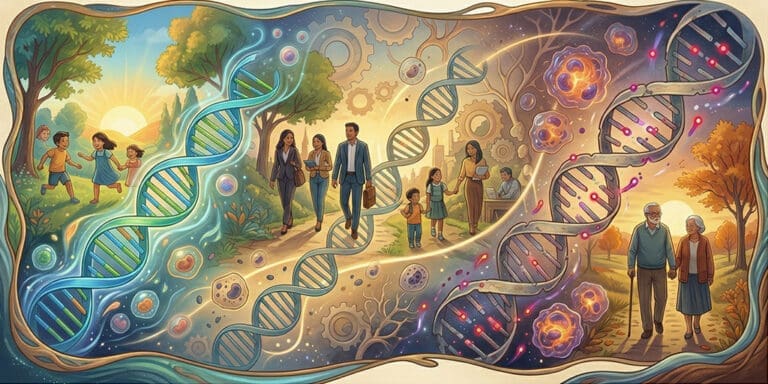
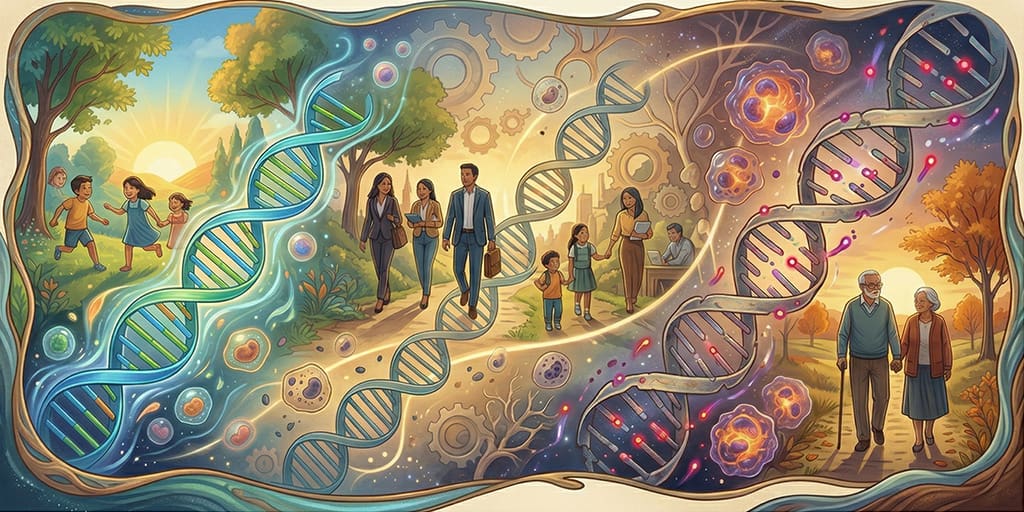
The simplest way to read this is that risk builds over time. Cancer does not appear from a single clock ticking in the body. It appears in a biological context shaped by time, accumulated damage, and weaker repair. That is why age works best as a broad background risk factor, not as a tidy single cause.
Why this does not erase preventable risks
That point needs a boundary. Aging is the biggest overall risk factor, but it does not cancel out preventable causes. Tobacco, alcohol, obesity, inactivity, infections, ultraviolet radiation, and other exposures still shape who gets many cancers and how much avoidable risk remains. Gromeus already covered why people do not die of old age, but from diseases that aging makes harder to resist.
Geriatric assessment improves older adult cancer care
The practical question is not only why cancer becomes more common with age. It is also how care should change once an older adult is diagnosed. The 2023 ASCO guideline update recommends geriatric assessment for older adults receiving systemic cancer therapy. That recommendation matters because a standard oncology visit may miss problems that strongly affect treatment tolerance and quality of life.
What geriatric assessment checks
Geriatric assessment looks beyond the tumor. It covers physical function, cognition, emotional health, comorbidities, polypharmacy, nutrition, and social support. In plain language, it helps the care team understand the whole person, not only the cancer.
Why the guideline matters
This is useful because treatment decisions in older adults are rarely only about the drug or the tumor type. They are also about whether the patient can tolerate treatment, recover from it, stay independent, avoid serious toxicity, and get the right support at home. That is why the guideline is best read as a care-quality recommendation, not as a minor optional extra.
Canada needs stronger geriatric oncology services
This issue is especially relevant in Canada. A recent Canadian review explains that most patients diagnosed with and dying from cancer in Canada are older adults, yet geriatric oncology is still a developing field with uneven capacity across the country. That gap matters because cancer burden rises as the population grows older, while specialized services, training, and implementation have not fully kept pace.
Why the Canadian gap matters
If cancer is concentrated in older adults, then care systems need more than standard tumor-centered workflows. They need staff, training, screening tools, referral pathways, and enough geriatric expertise to support treatment decisions that fit real patient vulnerability.
Why this is not only a hospital issue
The problem is wider than one clinic or one province. It affects screening, treatment planning, supportive care, survivorship, and end-of-life care. The need is structural. It fits the broader Gromeus reminder that lifestyle counts far more than genetics for health and longevity, but it also shows that health systems still matter once disease appears.
Geriatric oncology may also reduce waste
Better care for older adults is often framed as an added cost. The more careful reading is that it may help avoid poor-fit treatment plans, unnecessary toxicity, and downstream waste.
What the cost study found
One Canadian economic evaluation of a geriatric oncology clinic reported substantial net savings per patient after geriatric assessment changed treatment plans. That finding does not prove the same result in every hospital, but it supports the idea that better assessment can improve decisions rather than simply adding another layer of cost.
Limits and quality of evidence
This is not a universal cost guarantee. The economic evidence comes from one care model in one health care setting. Even the authors say more studies are needed in diverse systems. So the financial case is promising, but it should be treated as supportive evidence, not as a fixed number that will repeat everywhere.
What you can do about it
If you or someone close to you is older and facing cancer treatment, ask whether the care team can review function, memory, mood, falls, nutrition, medicines, and home support in a structured way. Verify claims with the sources below, keep track of newer guidance, and discuss treatment decisions with qualified oncology and health professionals. Aging raises risk, but good care can still change outcomes in important ways.
Sources and related information
The Independent – Leading risk factor for cancer revealed – 2025
The Independent article is the input source for this piece and is used as context for the claim that aging is the strongest overall cancer risk factor and that cancer systems should better adapt to older adults. It works best as a news-style summary of an argument that is better supported by guideline-based cancer care evidence.
National Cancer Institute – Age and Cancer Risk – 2025
The NCI page directly supports the core claim that advancing age is the most important risk factor for cancer overall. It is the strongest official source behind the article’s main conclusion.
World Health Organization – Cancer – n.d.
The WHO fact sheet supports the boundary that cancer incidence rises dramatically with age while modifiable risks still matter. It is useful for showing that aging and preventable exposures both belong in the same picture.
Journal of Clinical Oncology / PubMed – Practical Assessment and Management of Vulnerabilities in Older Patients Receiving Systemic Cancer Therapy: ASCO Guideline Update – 2023
The ASCO guideline record supports the claim that geriatric assessment should be used to identify vulnerabilities in older adults receiving systemic cancer therapy. It also supports the article’s summary of the key assessment domains.
Current Oncology – Improving Care for Older Adults with Cancer in Canada: A Call to Action – 2024
This Canadian review supports the claim that most patients diagnosed with and dying from cancer in Canada are older adults and that geriatric oncology remains a developing field. It is the main source behind the article’s Canada-specific care-system argument.
PubMed – Economic Evaluation of a Geriatric Oncology Clinic – 2022
This economic evaluation supports the claim that one geriatric oncology clinic reported net savings of about CAD 7,387 per patient seen. It also supports the caution that the financial result should not be generalized too far without more studies.
Canadian Cancer Society – Canadian Cancer Statistics 2025 report release – 2025
The Canadian Cancer Society release supports the claim that Canada’s cancer burden continues to grow in part because the population is growing and aging. It adds recent public-health context for why older-adult cancer care matters now.