

Artificial Intelligence
The rapid evolution of artificial intelligence. Breakthroughs in medical diagnosis, the detection of social manipulation, and the evolving role of algorithmic assistance in decision-making.
Basics
Humanoid robots are not in our homes because robot bodies still lag far behind AI
Humanoid robots remain rare outside labs and pilot factory trials because their bodies are not yet ready for the messy,…
In Practice
 video
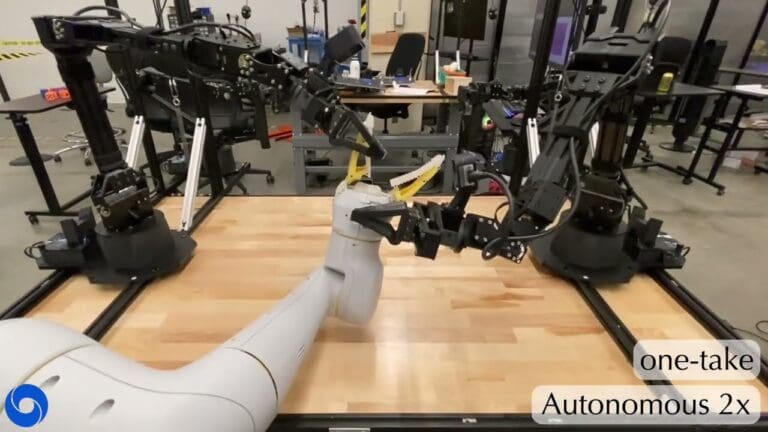
videoRobots equipped with AI can now independently perform repairs on other robots
Researchers from Stanford and DeepMind have developed the Aloha Unleashed project, where AI-powered robots are capable of autonomously performing complex…
When two people really talk, their brains start firing in sync
Large Language Models Facilitate Brain-to-Brain Communication in Conversations A study involving intracranial recordings during face-to-face conversations reveals that large language…
An AI trained on brain scans can reliably tell male and female brains apart
A Scientific Reports study used deep learning on diffusion MRI data to classify biological sex in healthy young adults. The signal came from white matter microstructure.
 video
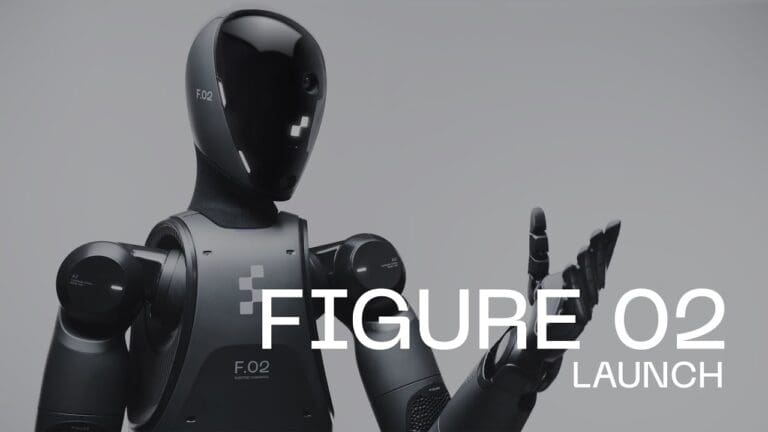
videoFigure unveils Figure 02, its advanced humanoid robot designed for real-world tasks
Figure, a robotics startup, has introduced a new humanoid robot capable of performing real-world tasks such as lifting and carrying…
Frontier
Tiny carbon tubes could make AI chips faster and more brain-like
Researchers are using carbon nanotubes to improve neuromorphic computing, a field of AI that mimics the human brain’s neural networks.…

Ray Kurzweil predicts human-level AI by 2029 and a merger with machines by 2045
Computer scientist and futurist Ray Kurzweil restated long-range forecasts in 2024 press coverage tied to his book The Singularity is Nearer. This article summarizes interview-reported claims about AI timelines, brain interfaces, and longevity, and labels what is speculation rather than clinical or engineering consensus.
Evo AI predicts gene mutations and could speed up bio design
Evo AI predicts the effects of gene mutations across DNA, RNA, and proteins, a step that could speed disease research and synthetic biology.
Google AI makes better diagnoses than human doctors
Google’s AMIE AI outperforms doctors in diagnosis and empathy in a text-based simulation, signaling a future where AI aids medical care.
AI enables first recorded 20-minute interactive exchange between humans and a humpback whale
An AI-driven study enabled a 20-minute conversation with a humpback whale named Twain. Scientists used call playback to test interspecies communication.

AI discovers millions of stable crystal structures
Google DeepMind's GNoME project combined graph neural networks with large-scale density functional theory checks to propose more than 2.2 million inorganic crystal structures that were stable in those physics-based tests relative to earlier public catalogs, including 381,000 additions on the updated stability hull for a new total near 421,000 stable crystals. Independent experimental structures in the ICSD matched 736 of the model's stable outputs. None of this guarantees cheap manufacturing or immediate devices; stability in a database is one step, and synthesis remains hard.